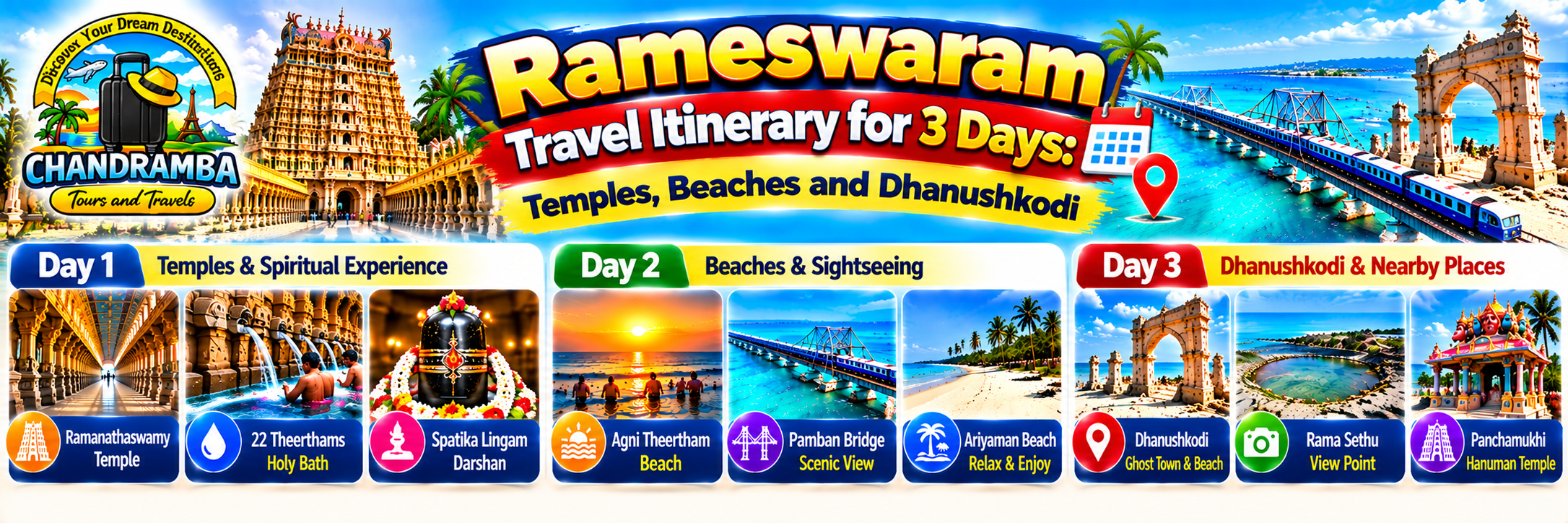
Rameswaram Travel Itinerary for 3 Days: Temples, Beaches and Dhanushkodi
Rameswaram is one of Tamil Nadu's most popular destinations for pilgrimage, coastal sightseeing, and family holidays. Famous for Ramanathaswamy Temple, the island also offers scenic sea views, historic landmarks, and the unique landscape of Dhanushkodi. A well-planned Rameswaram 3 day itinerary gives you enough time to explore its major attractions without rushing between temple visits and coastal excursions.
This three-day Rameswaram trip guide covers important temples, sacred bathing locations, Pamban Bridge viewpoints, Dhanushkodi, and practical local travel tips. Whether you are visiting with family, travelling as a couple, or planning a pilgrimage, use this sightseeing plan as a starting point and adjust it to your arrival time, interests, and mobility needs.
Rameswaram 3 Day Itinerary at a Glance
| Day | Main attractions | Travel focus |
|---|---|---|
| Day 1 | Ramanathaswamy Temple, Agni Theertham, Panchamukhi Hanuman Temple, Gandhamadhana Parvatham | Temple visits and local sightseeing |
| Day 2 | Pamban Bridge viewpoints, Kothandaramaswamy Temple, Dhanushkodi | Coastal sightseeing and history |
| Day 3 | Additional temple visits, local markets, relaxed coastal stops, onward travel | Flexible sightseeing and departure |
The schedule is flexible rather than fixed. Temple queues, ritual timings, weather, road conditions, and local access restrictions can affect the order of visits. Check current details before travelling.
Day 1: Ramanathaswamy Temple and Local Attractions
Morning: Ramanathaswamy Temple
Begin your trip with Ramanathaswamy Temple, the spiritual centre of Rameswaram. Dedicated to Lord Shiva, it is traditionally recognized as one of the twelve Jyotirlinga shrines. The temple is known for its magnificent corridors, sacred significance, and the 22 theerthams associated with pilgrimage traditions.
Allow at least two to three hours as a preliminary estimate, and more during busy periods or if you plan additional rituals. Check current darshan timings, entry arrangements, dress requirements, and the procedure for visiting the theerthams before arrival.
Visit Agni Theertham
After your temple visit, proceed to Agni Theertham, a sacred coastal bathing area near the temple. Devotees often visit for prayer and traditional observances. Its proximity to Ramanathaswamy Temple makes it easy to include in the same part of your itinerary.
Respect local religious practices and follow safety instructions. Avoid entering the sea when conditions are unsafe or bathing is restricted.
Afternoon: Panchamukhi Hanuman Temple
Continue to Panchamukhi Hanuman Temple, a popular religious attraction associated with Hanuman and the Ramayana tradition. This stop is suitable for visitors who want to explore more of Rameswaram's spiritual heritage.
Allow time for the visit and any queues. Check local opening arrangements before setting out.
Late Afternoon: Gandhamadhana Parvatham
Gandhamadhana Parvatham is another religiously significant site associated with local traditions about Lord Rama. Its elevated location can also offer views of the surrounding area when visibility and access permit.
Return to your accommodation after sightseeing. Keeping the first day focused on local attractions leaves more time for temple visits and rest.
Day 2: Pamban Bridge and Dhanushkodi
Morning: Pamban Bridge Viewpoints
Start the second day with a visit to a permitted Pamban Bridge viewpoint. The bridge is one of the region's best-known landmarks and provides striking views of the sea and the connection between the island and mainland India.
Allow around 30–60 minutes for a short viewpoint stop, depending on the location and time spent taking photographs. Do not stop on the roadway or railway infrastructure for pictures. Use designated public viewing areas and follow local instructions.
Visit Kothandaramaswamy Temple
Continue towards Kothandaramaswamy Temple in the Dhanushkodi area. The temple is associated with Lord Rama and is a worthwhile addition to a coastal and religious sightseeing route.
Check current road access and temple arrangements before departure, and allow enough time for the journey and visit.
Afternoon: Explore Dhanushkodi
Dhanushkodi is one of the most memorable destinations near Rameswaram. Known for its coastal scenery and the remains of a settlement affected by the 1964 cyclone, it attracts visitors interested in history, photography, and dramatic seascapes.
Spend time at permitted viewpoints and enjoy the landscape without entering restricted areas. Check current weather advisories, road access, and local safety instructions before travelling. Coastal conditions can change, and some stretches may be closed to visitors.
Return to Rameswaram with sufficient time for dinner and rest. Avoid scheduling other time-sensitive activities after this excursion because road and access conditions can affect your return.
Day 3: Flexible Sightseeing, Shopping and Departure
Morning: Complete Any Remaining Temple Visits
Use the third day to visit attractions you missed or to spend additional time at places that are important to your family or pilgrimage group. You may revisit the temple area for planned observances or explore other accessible local religious sites.
If you are travelling with senior citizens or children, use this day to keep the pace relaxed rather than trying to cover every possible attraction.
Explore Local Markets
Set aside time to browse local shops for souvenirs, religious items, and regional products. Keep your shopping time flexible, especially if you need to check out of your hotel or travel to the railway station or bus stand.
Optional: Additional Coastal Sightseeing
If your schedule allows, consider a relaxed visit to an accessible coastal viewpoint. Ariyaman Beach, also known as Kushi Beach, is in the wider Ramanathapuram region and requires a separate road excursion from central Rameswaram. Include it only if you have sufficient time and have checked current travel conditions.
For an early train, bus, or other departure, skip optional sightseeing and leave a comfortable travel buffer.
Approximate Distances for Your Sightseeing Plan
The following estimates can help with itinerary planning. Distances depend on the starting point, route, and exact destination entrance, so confirm them using a current map before travel.
| Attraction | Approximate distance from central Rameswaram |
|---|---|
| Ramanathaswamy Temple | Central town area |
| Agni Theertham | About 0.5–1 km |
| Panchamukhi Hanuman Temple | About 2–3 km |
| Gandhamadhana Parvatham | About 3–4 km |
| Pamban Bridge viewpoint | About 10–15 km |
| Kothandaramaswamy Temple | About 12–15 km |
| Dhanushkodi | About 20–25 km |
These are approximate planning figures, not live navigation measurements. Travel time can vary with traffic, stops, road conditions, and access restrictions.
Where to Stay in Rameswaram
For a convenient pilgrimage, many travellers prefer accommodation within reasonable reach of Ramanathaswamy Temple. Staying near the main town can make early temple visits, meals, and local sightseeing easier to organize.
- Near the temple: Convenient for pilgrims who prioritize darshan and nearby attractions.
- Central town: Useful for access to restaurants, shops, and local transportation.
- Family accommodation: Look for suitable room capacity, lift access if needed, parking, and convenient dining options.
Compare hotel facilities, cancellation terms, check-in times, parking, and the distance to your main attractions before booking. During busy pilgrimage periods, booking accommodation in advance is advisable.
Transportation Options for a Three-Day Rameswaram Trip
Choosing suitable transportation helps you manage your sightseeing plan and travel between attractions comfortably.
- Private cab: Useful for families and pilgrims who want a dedicated vehicle and flexible sightseeing stops.
- Car with driver: Suitable for a multi-day trip combining local temples and Dhanushkodi.
- Auto-rickshaw: Can work for shorter trips within town; agree on the fare before departure.
- Walking: Practical for nearby attractions around the temple area, depending on the weather and mobility needs.
When arranging a private vehicle, confirm the number of days and hours covered, total kilometres, waiting charges, tolls, parking fees, driver allowance, and any extra costs. Ask whether the quotation includes Dhanushkodi and other outlying destinations.
Best Time to Follow This Rameswaram Itinerary
October to March is often preferred for outdoor sightseeing because conditions may be more comfortable than during the hottest months. However, weather and sea conditions vary, and temple crowds can increase during holidays and special religious occasions.
- October to March: Often suitable for combining temple visits and coastal sightseeing.
- April to June: Plan outdoor activities early in the day and carry water and sun protection.
- July to September: Check weather forecasts and local advisories before coastal excursions.
Check temple schedules, holiday crowds, and Dhanushkodi access conditions for your specific travel dates.
Practical Tips for Planning Your Trip
- Confirm temple darshan timings and ritual arrangements before travelling.
- Book accommodation and transport early during busy periods.
- Start early on the day you visit Dhanushkodi.
- Carry drinking water, sun protection, and comfortable walking footwear.
- Allow additional time for queues, meals, and traffic.
- Respect temple dress requirements and photography restrictions.
- Check coastal safety advisories and follow access restrictions.
- Keep your departure day light if you have a train or bus to catch.
- For senior citizens, plan regular breaks and avoid overly long sightseeing sessions.
Frequently Asked Questions
Is three days enough to explore Rameswaram?
Yes. Three days usually allow time for the main temple, nearby religious attractions, Pamban Bridge viewpoints, and a Dhanushkodi excursion. Your pace will depend on darshan queues, travel conditions, and optional stops.
What should I cover on the first day in Rameswaram?
Focus on Ramanathaswamy Temple, Agni Theertham, Panchamukhi Hanuman Temple, and Gandhamadhana Parvatham. This keeps the first day centered on temple visits and nearby attractions.
Can I visit Dhanushkodi and Pamban Bridge on the same day?
Yes, they can often be combined in one sightseeing day. Check current road access, allow sufficient time for stops, and keep your schedule flexible.
Is a private cab useful for a three-day Rameswaram trip?
A private cab can make it easier to visit multiple attractions, particularly for families and pilgrimage groups. Confirm the itinerary, fare inclusions, vehicle capacity, and any additional charges before booking.
Should I reserve a hotel in advance?
Advance booking is recommended during holidays, weekends, and major pilgrimage periods. Choose accommodation according to your temple plans, budget, mobility requirements, and transport arrangements.
Plan Your Rameswaram Trip with Chandramba Tours
A well-organized Rameswaram 3 day itinerary lets you combine spiritual experiences, scenic coastal views, and local sightseeing at a comfortable pace. Spend the first day exploring the main temple area, the second discovering Pamban Bridge and Dhanushkodi, and the third completing any remaining visits before departure.
Contact Chandramba Tours to enquire about local sightseeing cabs, multi-day transportation, and customized Rameswaram tour packages. Share your travel dates, pickup location, passenger count, and preferred attractions to request an itinerary and quotation.
Plan your three-day Rameswaram trip with convenient transport, practical sightseeing routes, and time for the places that matter most to you.
Why Choose Us
Our Advantages
We ensure safe, reliable, and customer-focused travel services with professional drivers, sanitized vehicles, and round-the-clock support to make every journey worry-free.
Quality Service
We consistently upgrade our service standards to deliver the best experience for our customers.
24/7 Support
Round-the-clock customer support to assist you anytime, anywhere during your journey.
Safe Travel
Your safety is our top priority, with well-maintained vehicles and trained professional drivers.
Fully Vaccinated Drivers
All our drivers are fully vaccinated and vehicles are sanitized before every trip for your safety.